
If you want to make real progress in the gym, one habit matters more than almost anything else: tracking your workouts.
Whether your goal is building muscle, increasing strength, or simply staying consistent, tracking workouts gives you a clear record of what you've done and what to improve next. Without it, it's easy to repeat the same weights, forget previous sessions, or lose consistency without even noticing.
In this guide, you'll learn exactly how to track workouts effectively, what information to record, and the best ways to stay consistent with your training. If you're also comparing tools, check out our guide to the best workout tracker apps.
Track Your Workouts With Spottr
A workout tracker built for accountability and training with friends.
Download SpottrWhy Tracking Workouts Matters
Many people underestimate how powerful workout tracking really is. Tracking your workouts allows you to:
- See progress over time
- Increase weights gradually with purpose
- Maintain consistent training frequency
- Avoid repeating ineffective sessions
In strength training, progress comes from progressive overload — gradually increasing the stress placed on your muscles. If you don't know what you lifted last time, it's almost impossible to improve consistently. Even small improvements like +5 pounds, +1 rep, or +1 set add up significantly over weeks and months.
What You Should Track in Every Workout
A good workout log doesn't need to be complicated. At minimum, record these four things every session.
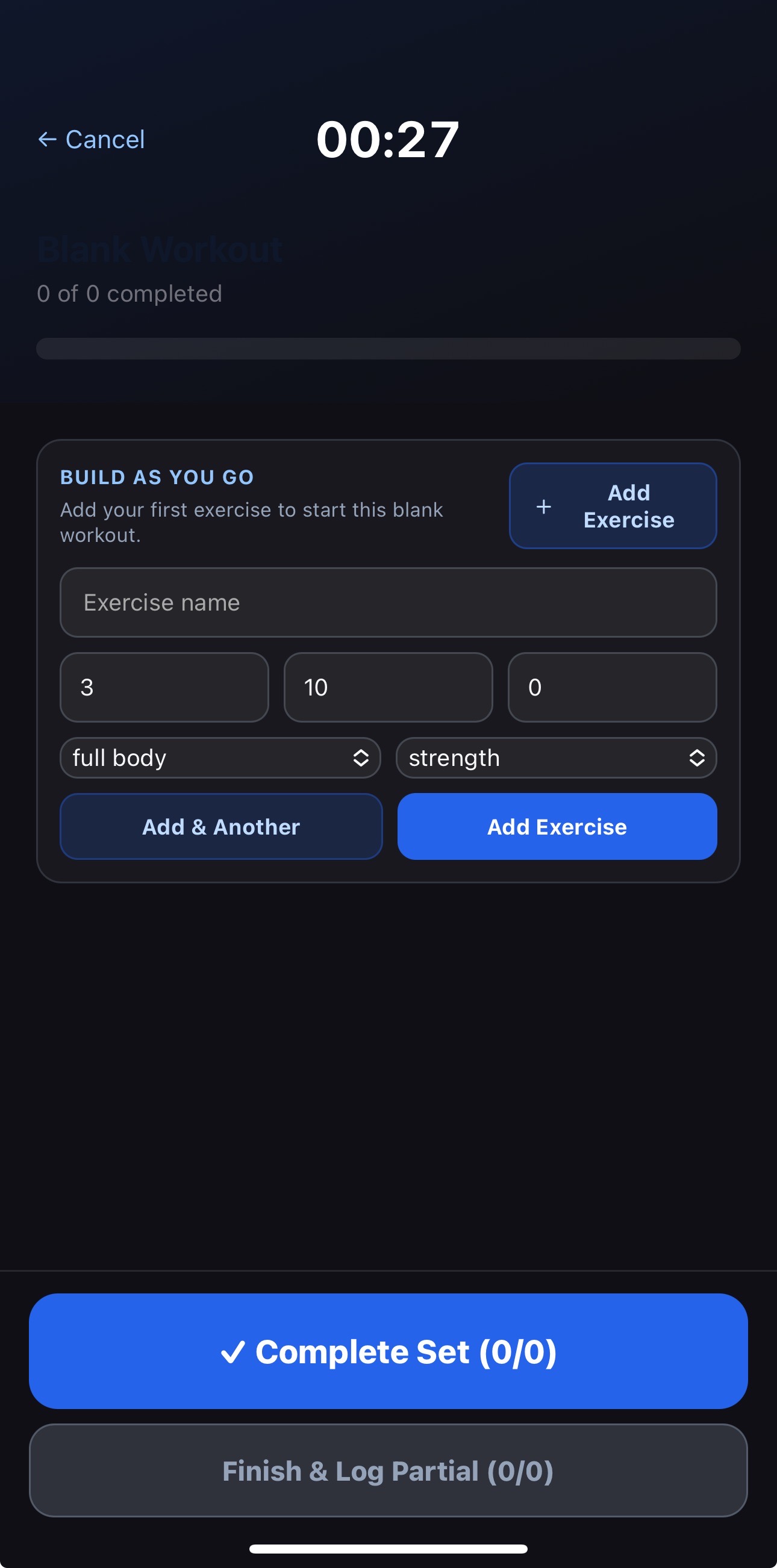
Exercises
Record every exercise you perform. This lets you see how your training structure evolves over time and ensures you're hitting each muscle group consistently.
- Bench Press
- Squats
- Pull-ups
- Dumbbell Rows
Sets and Reps
Sets and reps determine the training volume of your workout. Tracking reps tells you exactly when you're ready to increase weight. For example:
- Bench Press — Set 1: 185 × 5 Set 2: 185 × 5 Set 3: 185 × 4
Three sets with the target reps hit means it's time to move up next session.
Weight Used
Recording the weight is critical for strength progress. If you squatted 225 × 5 for three sets this week, your next goal is clear: 230 × 5. This is how progressive overload works in practice.
Workout Frequency
Tracking how often you train answers the questions most people lose sight of:
- Did I train legs this week?
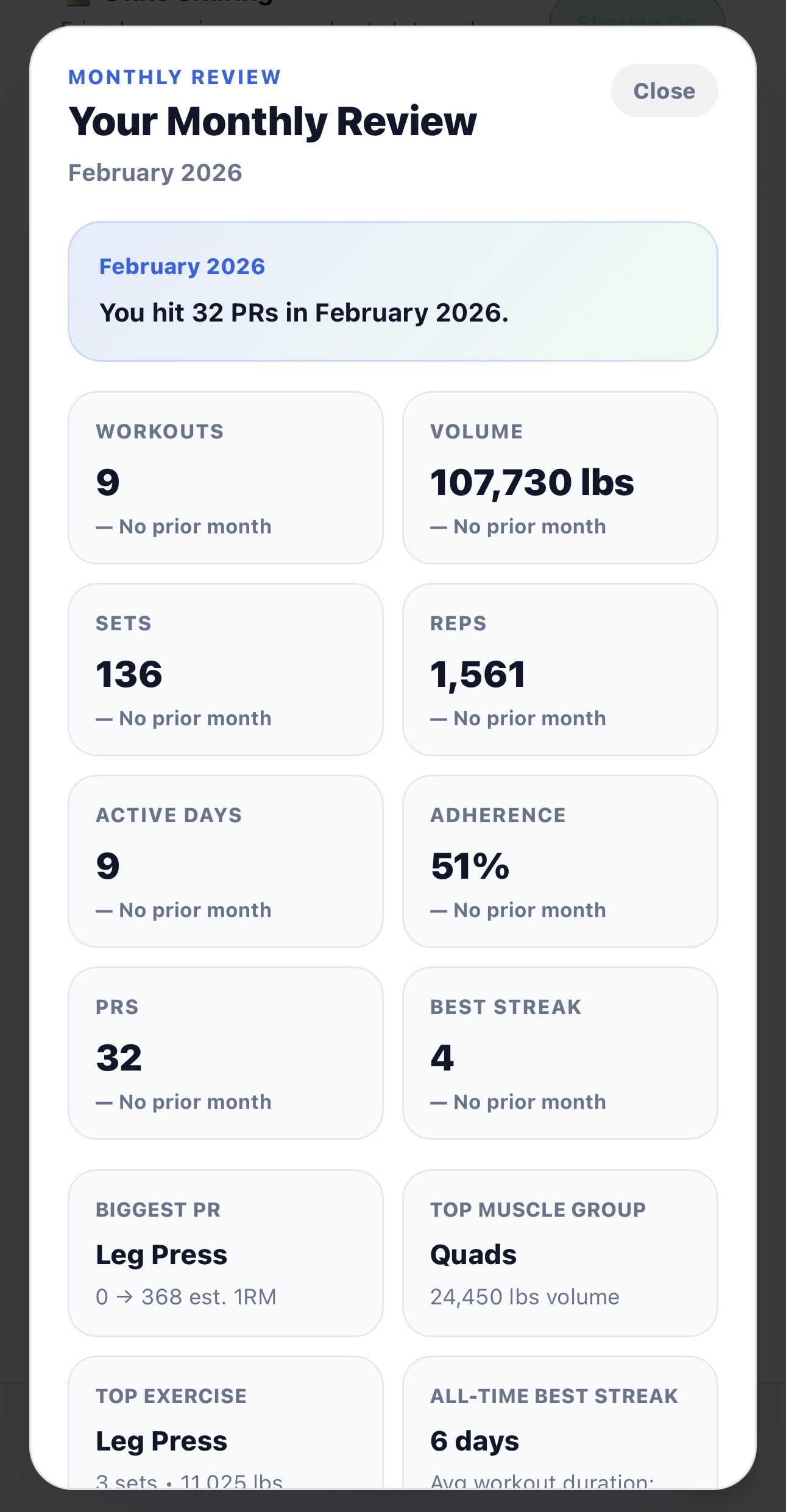
- How many workouts did I complete this month?
- Am I staying consistent?
Many people fall off their routines simply because they lose track of how often they're actually showing up.
Methods for Tracking Workouts
There are several ways to track workouts. Each has trade-offs.
Notebook
Simple, no technology required
Hard to analyze, easy to lose, no long-term statistics
Spreadsheet
Customizable and easy to analyze data
Time consuming and not convenient mid-workout
Workout Tracker App
Fast logging, automatic progress tracking, reminders, and stats
Requires a phone — though you already have that at the gym
Workout tracker apps are now the most common method because they remove nearly all the friction involved in manual tracking. If you want to compare the best options available, read our guide to the best workout tracker apps.
The Most Common Workout Tracking Mistakes
Even people who already track workouts can fall into habits that limit their progress.
Not Tracking Every Workout
If you only log some sessions, the data becomes incomplete and hard to act on. Consistency matters — make tracking part of your routine, not an afterthought.
Tracking Too Many Variables
Some lifters try to record rest time, tempo, heart rate, and fatigue levels all at once. While useful eventually, this slows down your logging and makes it harder to stay consistent. Start with the essentials: exercises, sets, reps, and weight.
Not Reviewing Your Progress
Tracking is only useful if you occasionally look back at what you've done. Every few weeks, check:
- Are your weights going up?
- Have you hit any new personal records?
- Are you training as often as you planned?
This review is what turns raw data into real motivation.
Why Accountability Makes Workout Tracking Work
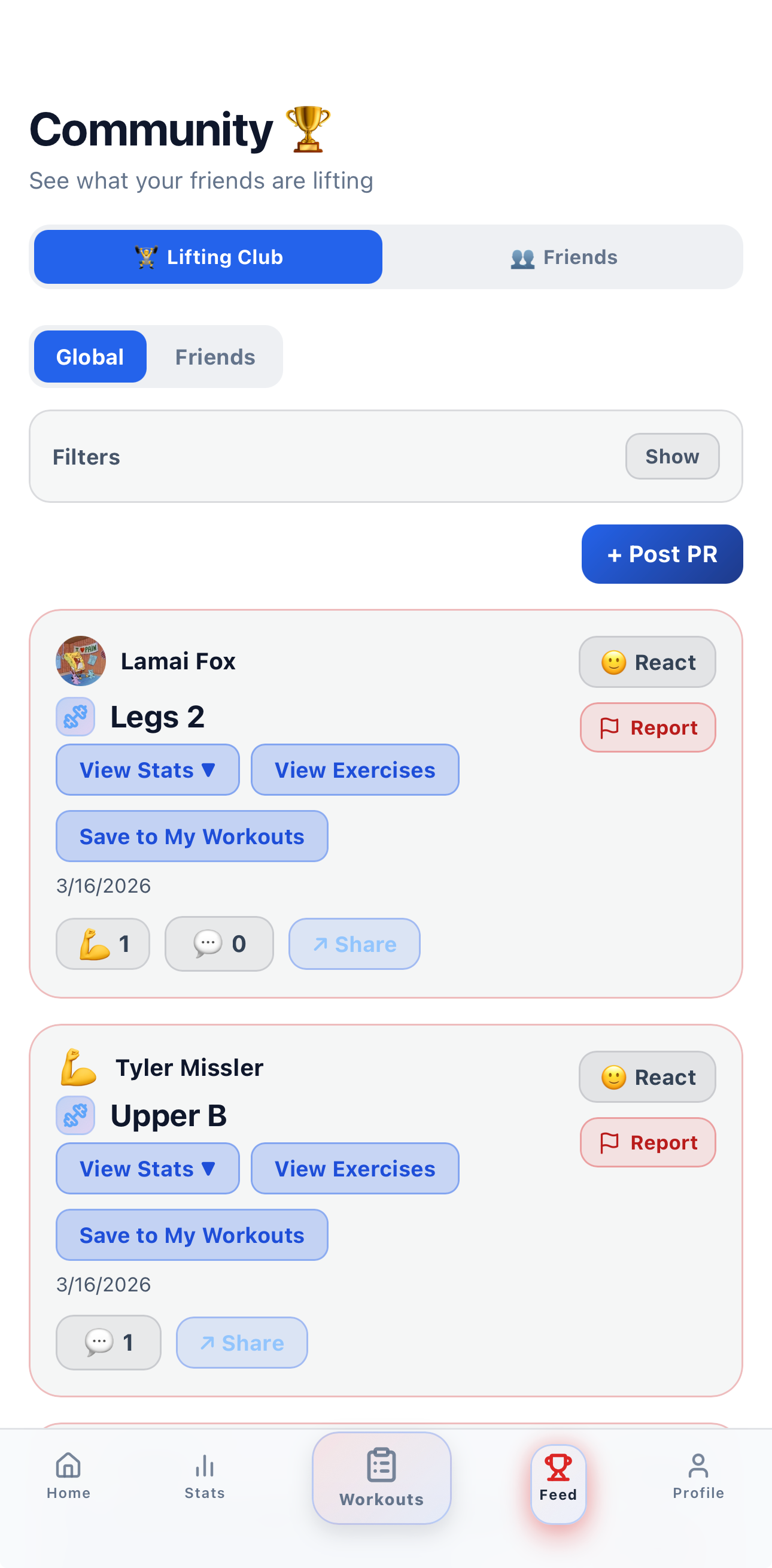
Tracking workouts is powerful, but accountability makes it even more effective. When other people can see your workouts or training progress, it creates a powerful motivation to stay consistent — the same reason having a gym partner works so well.
This is why the best fitness tracking apps are starting to build social layers into the experience. Seeing a friend complete a workout, or knowing your training partner can see when you miss a session, creates a feedback loop that keeps you engaged far longer than solo logging ever could.
It's not just a feature — it's the difference between people who stick with their training and people who quit after a few weeks.
Start Tracking Your Workouts Today
Join lifters using Spottr to stay consistent and track progress.
Download on the App StoreIf you want to make consistent progress in the gym, the first step is simple: start tracking your workouts. Recording exercises, sets, reps, and weights gives you a clear picture of your progress and ensures every session moves you forward.
If you want a workout tracker that combines progress tracking with real accountability, download Spottr and start building consistency today.